Webflow Conf 2026: What We Learned About AEO in the AI Era

TL;DR
- AI is changing how people discover brands.
Buyers increasingly use LLMs to research products, compare companies, and narrow down their options before visiting a website. - AEO starts with strong technical website quality.
Site speed, internal linking, schema, structure, crawlability, and clear content all influence how easily AI systems can find and understand information. - Traditional analytics do not capture the full impact of AEO.
AI discovery is often zero-click, so visibility, sentiment, self-reported attribution, and conversions need to be considered alongside referral traffic. - AEO is a broader content strategy challenge.
AI systems learn about brands from websites, social media, videos, third-party sources, and other content across the web. - Our biggest takeaway from Webflow Conf 2026:
AEO adds a new layer to website visibility, but the foundation remains familiar: strong technical implementation, useful content, authority, and consistent brand information.
Back at Webflow Conf 2026
Webflow Conf is always a special one for us.
We’ve been part of the Webflow partner ecosystem for years, and today, as a Premium Partner, Webflow is closely connected to a lot of the work we do at Povio. That makes being at the conference about much more than following product announcements. It is a chance to meet the people building the platform, spend time with other Partners, exchange ideas with some incredible builders, and see where Webflow is heading before those changes start shaping everyday work.
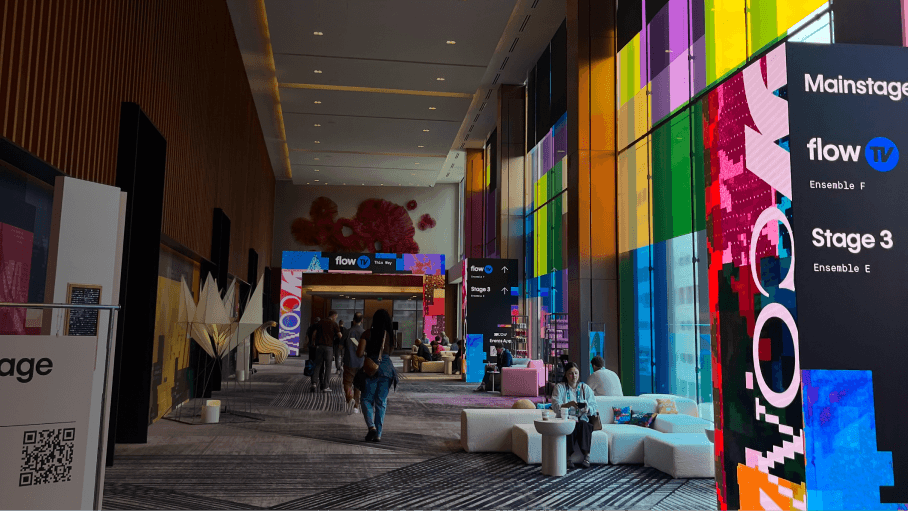
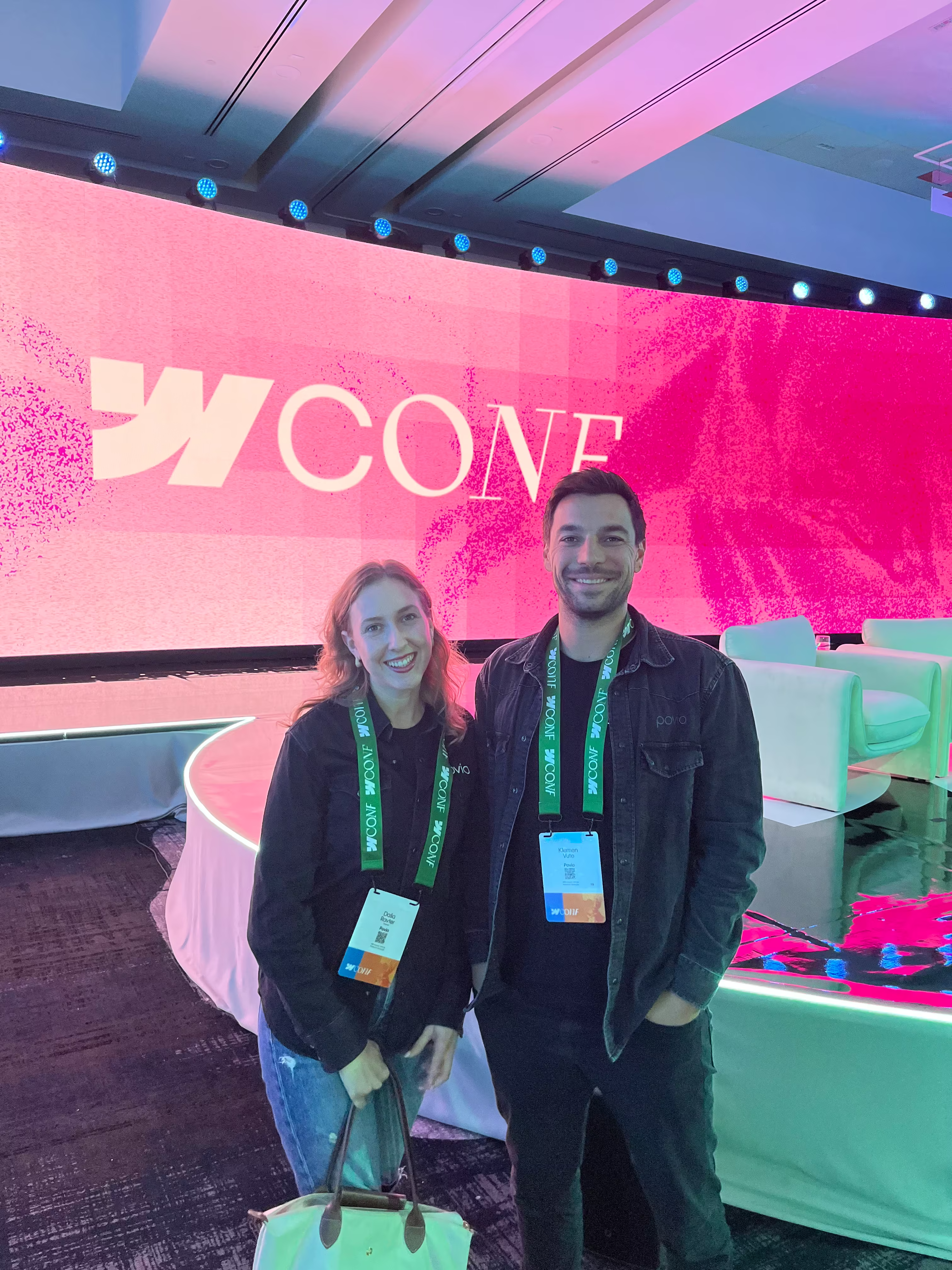
This year, our team was there in person.
We caught up with the Webflow community, spent time with its leadership team, met other teams pushing the platform in new directions, and got a first look at some of the updates coming to design, development, and marketing.
One of the biggest announcements was Source by Webflow, a new product built for marketers. There was plenty to unpack around it, and we’ll have more to say about what it could mean for marketing teams.
But another topic kept coming up throughout the conference: AI is changing how people discover, evaluate, and choose companies online.
And that brought the conversation back to AEO.

Why We Came Back to AEO
Source may have been one of the biggest product announcements at Webflow Conf 2026, but AEO was the topic we wanted to explore further after the conference.
There is a practical reason for that.
As AI becomes a bigger part of how people search for products, compare companies, and make buying decisions, websites are being asked to do more than rank in traditional search. Their structure, speed, content, authority, and accessibility to AI systems increasingly influence whether a brand appears in the answers people receive.
That makes AEO especially interesting to us as a Webflow partner. Many of the principles behind a strong Webflow build, from clean structure and fast performance to structured content and thoughtful technical implementation, are also becoming increasingly important for AI visibility.
One Main Stage discussion put a lot of data behind that shift.
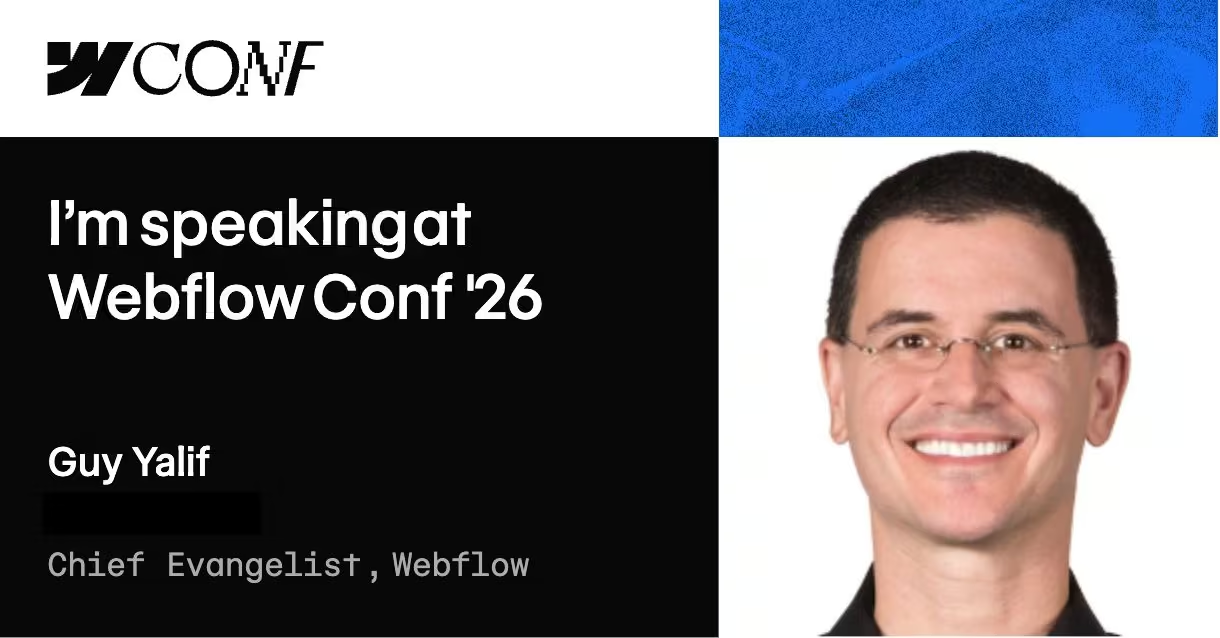
“AEO, One Year In: What the Data Killed” brought together Guy Yalif, Chief Evangelist at Webflow; Michael King, CEO of iPullRank; Ethan Smith, CEO of Graphite Growth; and Sydney Sloan, four-time CMO and Executive in Residence at Scale Venture Partners.
Rather than talking about AEO as another AI trend, they looked at what a year of experimentation has taught us: which early assumptions held up, which ones didn’t, and what companies can already do differently.
These are the takeaways that stayed with us.
AI Is Changing How People Discover Brands
One of the clearest signals from the panel was just how quickly AI is becoming part of the buying journey. Data shared during the discussion showed that more than 80% of buyers already use LLMs during the research process.
That changes what it means for a brand to be visible online.
Instead of moving through multiple search results and websites, buyers can ask AI search engines to compare products, recommend companies, explain differences, or narrow down their options based on specific requirements. In many cases, they can get much of that information without visiting a website at all.
Ranking well still matters, but it is no longer the whole picture. Brands increasingly need to understand whether they appear in AI-generated answers, what information AI systems associate with them, and how they are positioned against competitors.
That doesn't mean SEO is going away. Guy Yalif pointed out that going all in on AEO would mean ignoring more than 90% of existing search traffic. But AI search is growing quickly and converting well, making it increasingly important to invest in both.
Michael King described SEO as “deprecated, not dead.” There is still a lot of overlap between SEO and AEO, but SEO teams will need to evolve as AI becomes a more important source of information.
And for newer companies, that shift could create an interesting opportunity. Sydney Sloan noted that AI search can give brands without years of accumulated SEO authority another way to compete with established players.
Technical Website Quality Is the Foundation of AEO
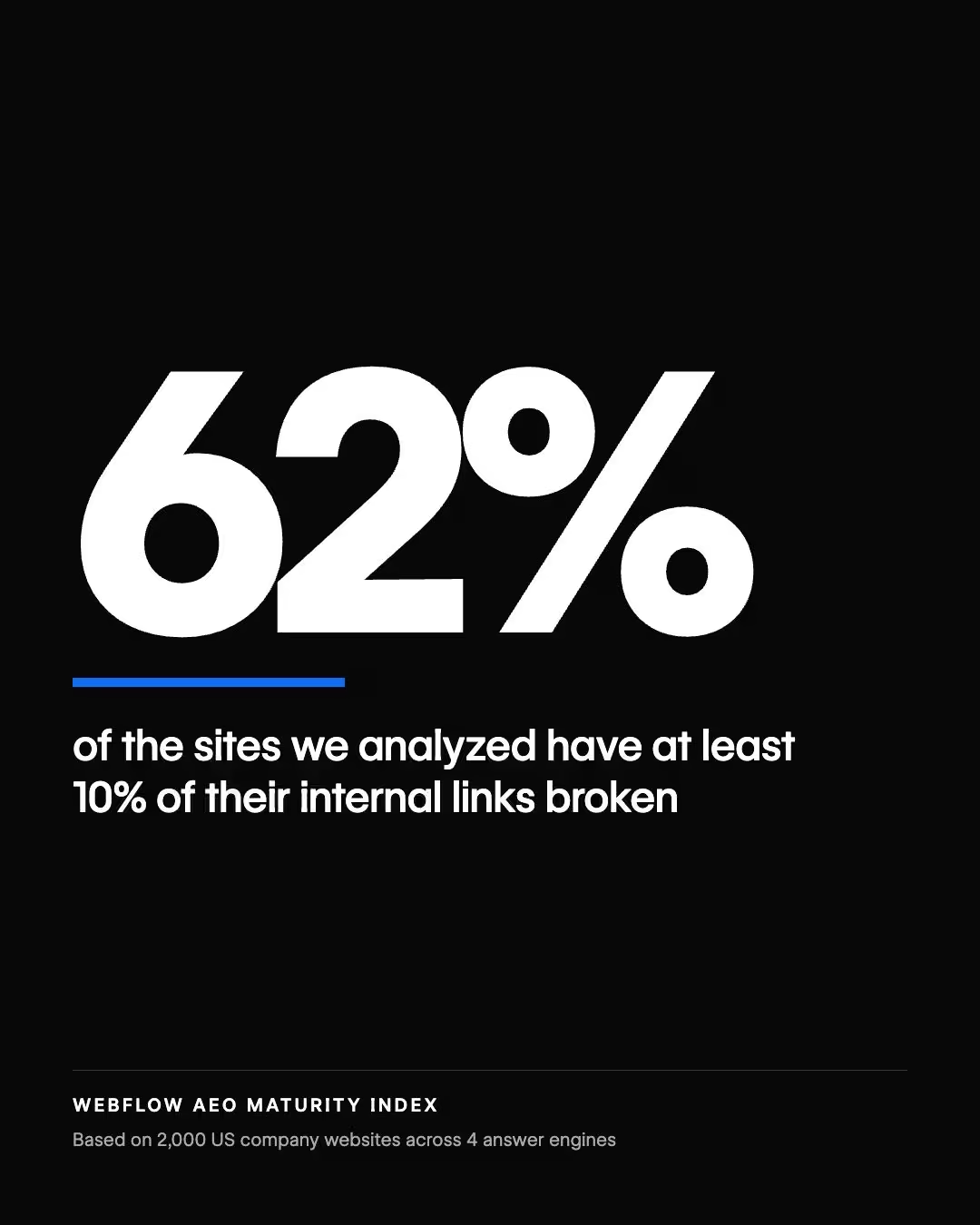
Many of the fundamentals behind SEO are just as important for AEO. Data shared during the discussion showed that 62% of websites have too many broken links, while 60% are missing SEO metadata on more than 20% of their pages. In addition, 57% of websites aren’t answering the questions their prospects are asking.
Internal linking, schema, heading hierarchy, and page speed are important for AI visibility. Ethan Smith shared some examples: sites that improved internal linking saw traffic increase by 25–50%, and one publisher testing recipe schema markup saw roughly 30% more traffic. Page speed also matters, as AI systems often turn a prompt into several search queries and fetch pages in real time. If a page takes too long to respond, it may not even be used as a source. In one case, a system gave up on a page after a 499 timeout. After page speed was improved, AI visibility increased by around 40%.
As Guy Yalif put it: “If you've got broken links, don't bother with anything else.” Before looking for new AEO tricks, businesses should make sure their websites are fast, crawlable, and properly structured.
Measuring AEO Is Complicated
One of the biggest challenges with AEO is measurement. Most AI interactions are zero-click, which means referral traffic doesn’t show AI's full impact. A user may discover and research a brand through an AI answer without ever visiting its website. That's a big shift for teams used to measuring success through a traffic dashboard.
AI results are also probabilistic. The same prompt can return different answers, sources, and brand positions each time. Running the same prompt several times, typically around seven, can give a more reliable picture of how often a brand appears.
Tracking tools have their own limitations. Many tools test prompts while logged out and force web search, while real users may be logged in and get answers without search or citations. Different tools also use different methods, so their results may not fully reflect what users actually see.
Sydney Sloan highlighted three main areas to look at: visibility, sentiment, and impact. Visibility shows whether a brand appears in AI answers and how often it gets cited. Sentiment helps track whether it is presented positively or negatively. Impact looks at referral traffic and conversions when users do visit the website.
Ethan Smith also recommended adding a simple “How did you hear about us?” question after conversion. Self-reported attribution can reveal AI's influence even when it doesn't appear in traditional analytics. In one study, last-touch attribution credited LLMs with just 0.9% of conversions, while self-reported answers put the number at 9%, a 10x difference.
AEO Is Largely a Content Strategy Problem
Traditional SEO content strategies may also need to change. Instead of generic glossary and definition content, the focus should be on high-intent content, such as product information, use cases, and problem-solving content. Competitive content is another important part of this, as it gives AI systems more context about how a product or brand compares to alternatives.
AI search also changes how topics need to be covered. Michael King explained that the same prompt can generate several related searches through query fanout. These searches may also expect a specific format, such as a comparison, checklist, or video, so brands need to think about both what content they create and where it can be found.
Content strategy also goes beyond the website itself. AI systems can pull information from social media, videos, LinkedIn posts, and other sources across the web. King described AI as largely a content strategy problem rather than just an AEO problem. Brands need to think about their whole content ecosystem and where their information appears. That's more ground to cover than teams usually plan for.
What Webflow Conf 2026 Reinforced About AEO
One of the strongest takeaways we brought home from Webflow Conf 2026 was that AEO does not require businesses to rebuild everything from the ground up.
Guy Yalif summarized the work across four areas: content, technical quality, authority, and measurement. What stood out to us was how closely those areas connect to the fundamentals of a strong website.
That was a recurring theme throughout the conference. AI is changing how people discover brands, but it is also putting more pressure on the quality of the websites and content those systems rely on.
Sydney Sloan closed the discussion with another important point: businesses do not need to feel behind. The priority is to understand where buyers are already searching for information and build a presence there. And that cannot sit with marketing alone. AEO touches content, development, SEO, brand, analytics, and the technical quality of the website itself.
For us, that made the AEO conversation at Webflow Conf especially relevant.
We spend a lot of time thinking about how Webflow sites are structured, how quickly they load, how content is organized, and how easily that content can be maintained and expanded. Those decisions already affect the experience of the people visiting a website. Increasingly, they also affect how AI systems can find, understand, and use the information on it.
So while AI search introduces a new layer of visibility, the foundation is familiar: a strong website, clear content, solid technical implementation, and a brand that is represented consistently across the web.
That is one of the reasons we left Webflow Conf 2026 even more confident in the direction Webflow is taking. The platform is evolving alongside the way people search, create, and manage content, while the fundamentals behind a well-built website remain just as important.
If you are planning a new Webflow website, or looking at how your current one performs in search and AI discovery, let’s talk.
%25201.webp)
.avif)